
A time to stop
Sometimes, not trying is just what we need

Having just driven long distances to join my band for our first summer engagement, the magical Elderflower Fields festival, I had the chance to listen to some excellent audio content which made me reflect on how I deal with the crisis we are in.
This Substack series is informed by the research for my upcoming book, Changing Stories, Finding Hope, which looks at the way negative – and flawed - narratives shape our perception of the world we live in and our ability to imagine and create a more positive future. For more background please read my introductory Substack.
If you are reading this, I don’t need reminding you that the world is a pretty dark place these days. I would also venture that this is causing you significant concern. This dread can be very debilitating. Not just because we feel saddened by the way the world is turning, but also because we feel utterly useless in trying to do something about it. It all seems too overwhelming.
Working on Changing Stories brings me a lot of respite from this dread as the work helps me identify alternative pathways, away from the darkness that seems to engulf us, and I hope it will have the same effect on you when you read the book. But the dread does have a way of creeping back in and can sometimes be very hard to shake, despite the many reasons for hope I am finding through my research.
Last week, as I was preparing to make my way down to the English South Coast to see my children and join the rest of my band members for our first music festival of the season, I was unable to shake this feeling of despair. My brain was firing off an explosion of thoughts that brought together the growing fascism in the US, dissected by Rutger Bregman on this platform; the recent victories of the far-right Reform party in the UK; the rising alienation in society; and our terrifying environmental predicament. Suddenly the work I am doing on Changing Stories, Finding Hope, seemed utterly pointless.
How did I respond to this? By keeping myself constantly busy with writing, reading, exercising and scrolling. These activities (apart from scrolling) usually make me feel good, giving me a sense of accomplishment, that I am working towards my purpose. Not this time. The writing was rubbish, the reading distracted and the exercise numbing. These were not productive activities, but coping mechanisms to avoid having any downtime, for fear that the dread might overwhelm me if I allowed my brain to be free. Another coping mechanism was constantly checking my email and reading the news in the false hope that good news might suddenly appear. It didn’t.
Then I closed my laptop, got into my van, and started driving to Manchester to meet up with my daughter. I had 7 hours ahead of me and was determined to fill them with more information. I had lined up a series of podcasts, was looking forward to finishing Michael Pollan’s A World Appears: A Journey into Consciousness and to start listening to Rob Hopkins How to Fall in Love with the Future. That should keep me in the safe space where the darkness of the world could be kept at bay.
But then something interesting happened. My powers of concentration are pretty poor at the best of times, with my mind constantly drifting off, and before I knew it, I was ten miles closer to Manchester and had missed ten minutes of the audiobook. But the thoughts were no longer dark. The content I was listening to was blending with the stunning Highland views I was driving through, and with those random thoughts that can only appear when the mind is left to wander free, reopening a space for hope and imagination to return.
I’ve been thinking about this quite a bit over the last week, trying to understand why my pattern of thinking had changed, and I think it was down to two things: First, I was no longer exposing myself to negative content through email, social media or the news. Second, and probably more importantly, I was no longer in a position to influence things. I was driving, so could not research another section of the book or write another Substack article. I became accepting of the way things are and temporarily let go of the desire to change them. For a short period, I was not trying to change the future, but just enjoying the present.
This is not a place I want to stay in, because I can’t – and don’t want to – remain a passive observer of a world falling apart, but it also made me realise that it’s OK, even necessary, to take a step back and stop trying occasionally. To just enjoy the present moment.
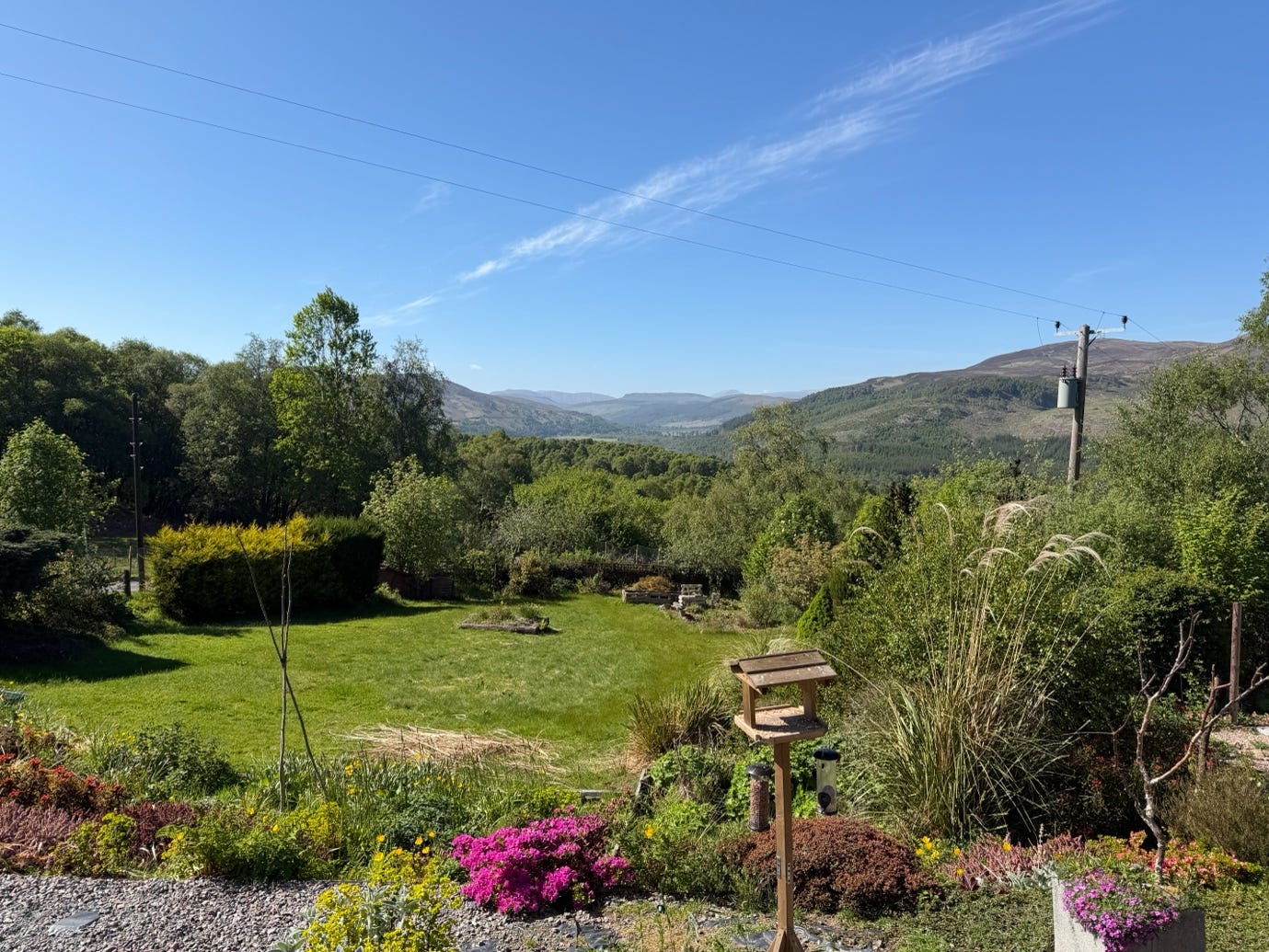
And with that, I am now going to sit in the sunshine and enjoy the view.
If any of this resonated with you, check out the Nate Hagens’ ‘A Guide to Staying Human’ series (especially the third instalment), who offers some very helpful guidance for those of us who tend to get trapped in our thoughts and struggle to balance a broader mission to ‘fix’ what is wrong with the world with the importance of being present for ourselves and our loved ones.
I love that Oliver. So important to have staring into space (and nature) time - giving the mind a rest, realising what we have and don't have control over.